


You’ve heard both sides. One marketer says “You need a professional website.” Another says “Websites are dead, build a funnel instead.” The conflicting advice leaves you confused about where to spend your limited time and money.
Here’s the truth: both are right, and both are wrong. It’s not about which one is objectively better. It’s about which one solves your immediate problem.
The Real Difference: Purpose, Not Features
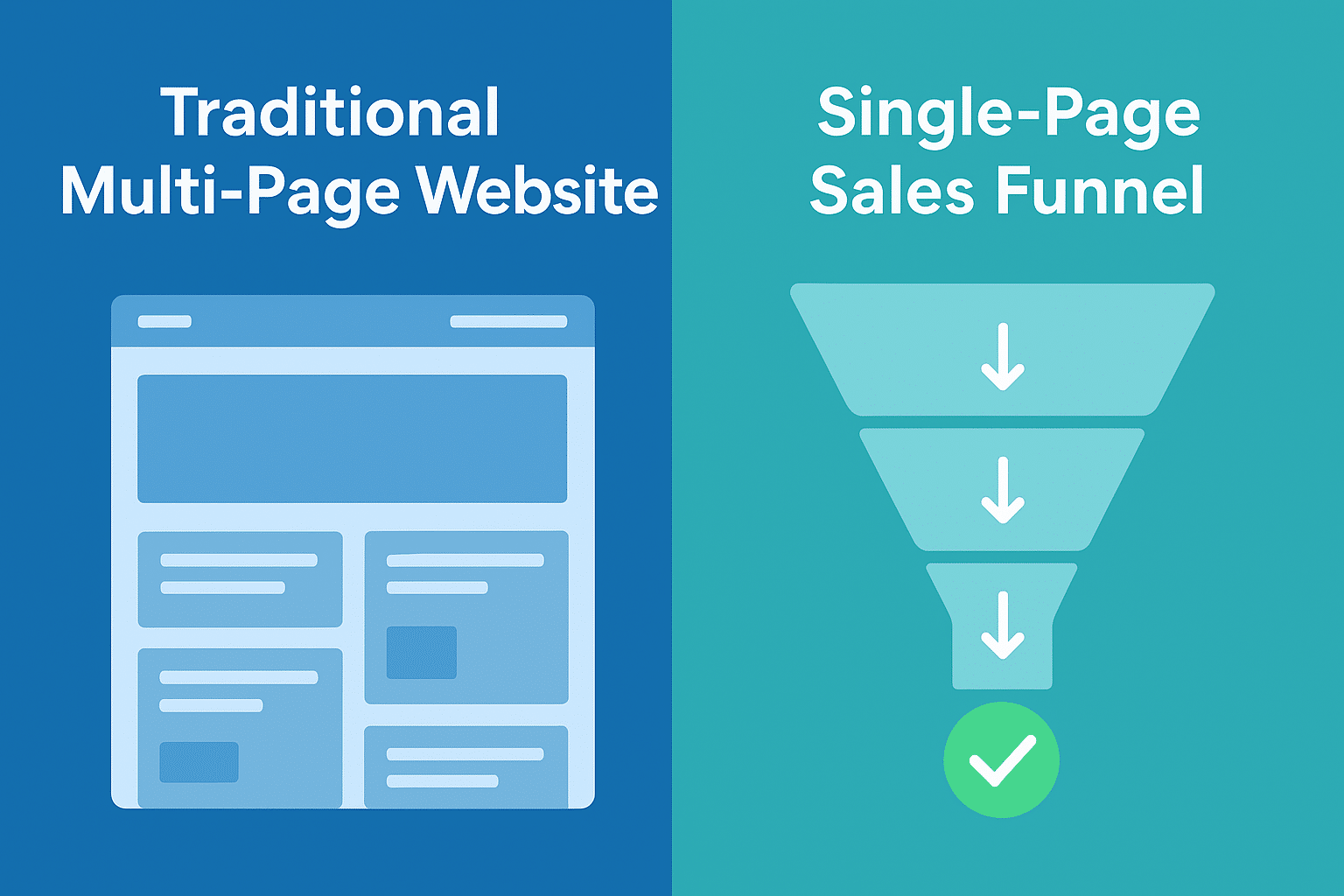
A website is your digital storefront. It’s designed for visitors who already know about you, or who discovered you through Google, a referral, or word-of-mouth. It gives people options: an About page to learn your story, a Services page to explore offerings, a Blog to discover valuable content. Websites build credibility, support SEO, and establish long-term brand authority.
A funnel is laser-focused on a single conversion goal. It eliminates distractions and guides visitors through a predetermined path, from problem awareness to solution acceptance. Funnels work exceptionally well with paid advertising because they remove choice overload and direct every visitor toward one clear action: book a call, download a lead magnet, or make a purchase.
The data backs this up: optimized sales funnels convert at 10-30%, while typical websites hover around 1-5%. That’s a massive difference.
So Which One Should You Actually Build First?
The answer depends on three factors: your traffic source, your business stage, and your immediate goal.
Choose a Funnel If:
You’re running paid ads and need immediate conversions. Sending cold traffic to a generic website homepage wastes money because visitors don’t know who you are or why they should care. A funnel removes that confusion. You’re a startup with limited budget and need results fast. You don’t have time to build and optimize a full website. A focused funnel built in days can generate leads and revenue while you validate your business idea. Your primary goal is lead generation or sales, not brand building. If you measure success by phone calls booked or products sold, a funnel is your tool.
Choose a Website If:
You need organic search visibility. Websites rank in Google. Funnels don’t. If you want customers finding you through search results, you need a website. You offer multiple services or products targeting different audiences. A website lets different segments find what matters to them without getting lost in a single-purpose funnel path. You’re an established business and credibility is your selling point. Enterprise clients, professional services, and established brands benefit from the comprehensive authority a website provides.
The Smart Approach: Start With Your Traffic Source
Most confusion disappears when you answer this: How will visitors find you?
If you’re advertising on Facebook, Google Ads, or LinkedIn, paying for every click, send traffic to a funnel. Make every dollar count by converting cold prospects into leads immediately.
If you’re relying on Google searches, referrals, and inbound marketing, organic sources, build a website first. You need SEO-friendly pages that rank, and you need credibility markers that warm up prospects before they’re ready to buy.
The Truth Most Marketers Won’t Tell You
The best businesses use both. Your website works 24/7 to attract and establish credibility. Your funnels intercept interested prospects and drive specific conversions. Service businesses especially benefit from this combination, your website builds trust, your funnel books the call.
But here’s what matters most: don’t chase perfection in both. Start with whichever directly solves your current problem. Build and validate. Then add the other when you’re ready to scale.
Too many startups waste months building elaborate websites they don’t need. Too many established businesses ignore funnels and leave conversions on the table. The difference between success and struggle often comes down to choosing right, not choosing both.
Your next step depends on your immediate reality. If you need leads this month, build a funnel. If you need to be found in Google this year, invest in a website. And if you’re ready for both, ensure they work together, not against each other.